
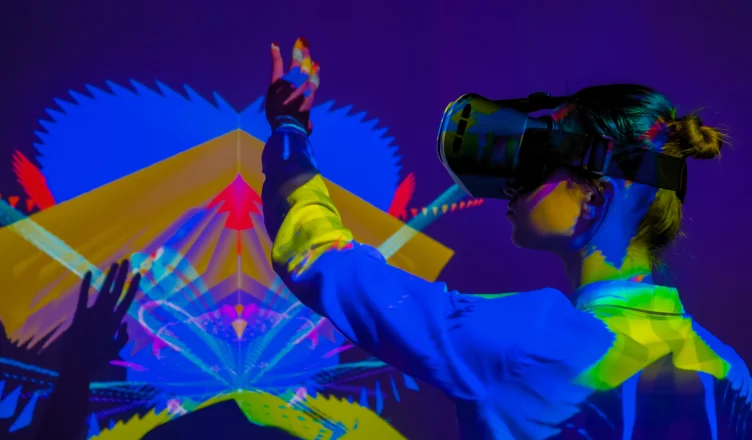
Let’s be honest. We’re all a bit tired of the same old digital ads. The banners, the pre-roll videos, the endless scroll. It’s noise. Cutting through that noise today requires something that doesn’t just interrupt a user’s world, but enhances it. That’s where spatial computing and augmented reality (AR) come in. They’re not just buzzwords; they’re the next frontier for meaningful brand connection.
Think of it this way: instead of asking a customer to visit your website, you’re bringing your product, your story, into their physical space. It’s a handshake, not a shout. This article dives into how forward-thinking brands are leveraging these technologies to build experiences that are, well, unforgettable.
What We’re Really Talking About: Spatial Computing vs. AR
Okay, quick clarification. The terms get tossed around together, and for good reason. They’re related, but here’s the deal:
- Augmented Reality (AR): This overlays digital information—images, 3D models, data—onto the real world through a device screen. Think of the IKEA Place app letting you see a sofa in your living room. It’s a layer.
- Spatial Computing: This is the broader umbrella. It’s the tech that enables our devices to understand and interact with the 3D space around us. It’s the “intelligence” that allows AR to work seamlessly. It’s the difference between a static overlay and a digital object that knows it’s behind your coffee table.
For brands, the magic happens when you use spatial computing’s understanding of space to power truly contextual AR experiences. It’s not just a floating logo; it’s an experience that respects and interacts with the user’s environment.
The Tangible Benefits: Why Bother with Immersive Tech?
Sure, it’s cool. But does it move the needle? In fact, it does. The benefits go far beyond a “wow” factor.
| Benefit | How It Manifests | Real-World Implication |
| Reduced Purchase Uncertainty | Virtual try-ons, product visualizations in-situ. | Lower return rates, higher confidence at checkout. |
| Enhanced Engagement & Dwell Time | Interactive 3D brand stories, gamified experiences. | Deepened emotional connection, stronger brand recall. |
| Memorable Storytelling | Breaking the 2D plane to let users “step inside” a narrative. | Transforming passive viewers into active participants. |
| Valuable Spatial Data | Understanding how users interact with digital objects in space. | Insights for product design, retail layout, and marketing. |
The key here is utility. The most successful branded AR isn’t a gimmick; it solves a problem. It answers a question: “Will this fit?” “How does this work?” “What would this look like here?”
Building the Experience: Practical Applications That Work
So, what does this look like in practice? Let’s move from theory to application.
1. The Virtual Showroom and Try-On Revolution
This is the low-hanging fruit, but it’s incredibly effective. Fashion and beauty brands led the charge with virtual makeup and clothing try-ons. But now, it’s everywhere. Automotive companies let you configure and place a life-sized car in your driveway. Home goods brands let you visualize paint colors on your actual wall or a new grill on your patio.
The spatial computing element here ensures shadows are cast correctly, objects scale properly, and they occlude realistically behind real-world items. That realism builds trust.
2. Interactive Packaging and “Living” Manuals
Imagine pointing your phone at a cereal box and watching a animated character pop out and tell a story about sustainable farming. Or scanning a complex piece of furniture assembly instructions to see a 3D holographic guide play out step-by-step on your floor.
This turns a static physical asset into a dynamic portal. It adds immense value post-purchase, fostering brand loyalty and reducing customer service calls. It’s a prime example of leveraging AR for immersive brand experiences that educate and delight.
3. Location-Based Storytelling and Gamification
This is where things get really spatial. Brands can create location-triggered experiences in specific stores, at events, or even across city landmarks. A cosmetics counter could unlock an exclusive virtual makeover tutorial. A historical brand could bring a past event to life on the very street where it happened.
It’s part treasure hunt, part narrative. It drives foot traffic, creates shareable social moments, and builds a deeper, context-rich connection between the brand and the place.
Getting Started: A Realistic Path Forward
Feeling inspired but overwhelmed? You’re not alone. The tech can seem daunting. The trick is to start small and strategic.
- Identify a Single Friction Point: Don’t try to rebuild your entire brand universe. Find one customer pain point—visualizing size, understanding assembly, learning product features—and solve that.
- Prioritize Accessibility: The beauty of mobile AR is it’s in everyone’s pocket. Start with a web-based AR experience (no app download required) to lower the barrier to entry. Honestly, that’s where the biggest audience is right now.
- Focus on Value, Not Fluff: Ask yourself: does this make the customer’s life easier, more fun, or more informed? If not, rethink it. The goal is utility-driven immersion.
- Measure What Matters: Track engagement time, conversion lift, scan rates, and social shares. This data is gold for proving ROI and iterating on your next, bigger project.
The Human Connection in a Digital Layer
Here’s the thought we’ll leave you with. At its core, marketing is about human connection. Spatial computing and AR, for all their digital complexity, offer a surprisingly human-centric path forward. They allow us to blend our digital and physical selves in a more intuitive way. They let us play, explore, and learn in the world we already inhabit.
The brands that will win tomorrow aren’t just selling products; they’re co-creating moments within a customer’s own story. They’re not just building an experience; they’re reserving a space—a physical, tangible space—in their customer’s world and memory. And that’s a connection that no traditional ad can ever hope to match.