
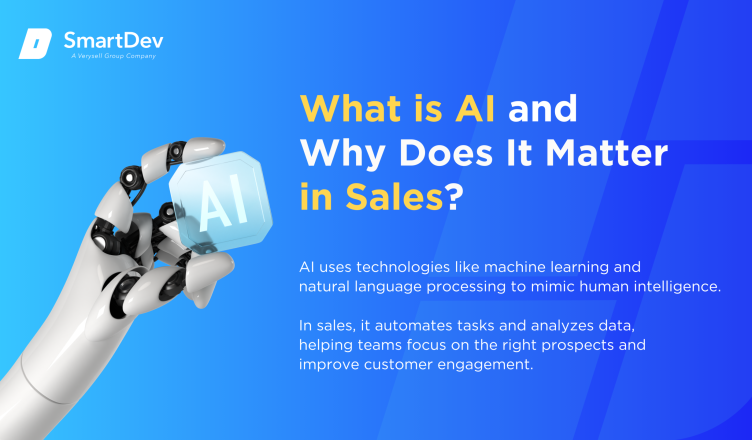
Here’s the deal: the sales landscape is shifting under our feet. AI and automation are no longer futuristic buzzwords—they’re the tools reshaping every conversation, every pipeline, every handshake. And honestly, that’s a good thing. But it leaves many wondering: does the human-centric art of consultative sales still matter?
Absolutely. In fact, it matters more than ever. The core principle—building trust, diagnosing deep needs, and guiding clients to a solution—is irreplaceable. But the how has to evolve. The old playbook won’t cut it. This is about blending the irreplaceable human touch with the relentless efficiency of machines. Let’s dive in.
The New Sales Reality: AI as Your Co-Pilot, Not Your Replacement
Think of AI not as a robot taking your seat, but as the most organized, data-obsessed colleague you’ve ever had. It handles the grunt work—the data crunching, the meeting scheduling, the initial lead scoring—freeing you up for, well, the actual consultation. The irony is beautiful: automation, when used right, makes sales more human.
Your client’s world is automated too. They’re inundated with generic, bot-driven outreach. That noise creates a powerful opportunity. When you, a real human, come in armed with insight and empathy, you stand out like a lighthouse in a fog of spam. The key is to leverage AI to get you to that human moment faster and smarter.
Where Machines Excel (And Where They Stumble)
It’s crucial to know the division of labor. Here’s a quick breakdown:
| Let AI & Automation Handle: | The Human Consultant Must Own: |
| Data aggregation & trend analysis | Interpreting nuance & emotional context |
| Initial lead qualification & scoring | Building genuine rapport & trust |
| Meeting logistics & follow-up reminders | Asking the “why behind the why” |
| Drafting routine communications | Navigating complex political landscapes |
| Competitor & market monitoring | Ethical judgment & creative problem-solving |
Redefining the Consultative Process: A Three-Part Adaptation
1. The AI-Augmented Discovery Phase
Gone are the days of walking into a discovery call cold. AI tools can now give you a frighteningly detailed pre-brief: recent company news, the prospect’s social activity, tech stack signals, even inferred pain points from earnings calls. But—and this is a big but—this isn’t for ambushing. It’s for context.
Your new opener isn’t, “I see you use X software.” It’s, “I noticed your team is focusing on expanding into the European market. The challenges you might be facing with Y are something we’ve seen before. Can we explore that?” You’re using data to demonstrate preparedness, not to perform a parlor trick. The goal is deeper, faster empathy.
2. From Pitch Partner to Insight Architect
This is the heart of the shift. When product info and pricing are just a chatbot query away, your value isn’t in regurgitating specs. It’s in architecting insight. Use AI to model scenarios for your client. “Based on your current workflow data, our tool could automate roughly 70% of these manual tasks. But let’s talk about the other 30%—the complex exceptions where your team’s expertise is critical. How do we design for that?”
You’re not selling a tool; you’re facilitating a strategic planning session. You become a guide through the implications of change—the human, operational, and cultural stuff the AI can’t see.
3. Automating Fidelity, Not Relationships
Post-sale is where automation truly shines in service of consultation. Set up automated check-ins that deliver value: usage reports, benchmark data, helpful tips. This isn’t “touching base.” It’s providing ongoing, actionable insight.
Then, when the system flags a drop in usage or a milestone achieved, you pick up the phone. Your outreach is now hyper-relevant. “Saw the team hit the 100-project mark—that’s huge. I’ve got a couple of ideas on streamlining the review stage based on that volume. Got 10 minutes?” The automation maintains the connection’s pulse; you provide the healing, or the celebration.
The Human Skills That Become Superpowers
So, what skills should you double down on? Honestly, the softer, messier ones.
- Emotional Intelligence (EQ): Reading a room, sensing hesitation, building genuine rapport. AI can’t feel the vibe.
- Critical Thinking & Judgment: Machines provide data; you provide wisdom. Knowing when to trust the algorithm’s recommendation and when to override it based on a gut feeling about the client’s culture.
- Storytelling & Narrative: Weaving data points into a compelling story about the client’s future. Facts tell, but stories sell—and more importantly, they stick.
- Ethical Navigation: As solutions get more powerful, guiding clients on responsible use, data privacy, and change management becomes a core part of the consultation.
A Practical Starting Point: Your First 30 Days
Feeling overwhelmed? Don’t. Start small. Pick one area to augment this month.
- Audit your tools. Are you using your CRM’s AI features? What about a tool like Gong or Chorus to analyze your call patterns?
- Redesign one template. Take your standard discovery email. Use an AI writer to generate 5 variations focused on insight-led hooks, not availability. Pick the best and test it.
- Practice “Insight Scripting.” Before your next call, use AI to analyze the prospect’s industry. Find one non-obvious trend. Frame one question around it. That’s your value.
The goal isn’t perfection. It’s progress. A little awkwardness as you learn is, well, human.
The Irreplaceable Core
At the end of the day, people still buy from people. They buy confidence, understanding, and a shared vision. AI and automation are simply the new landscape upon which that timeless transaction occurs. They’re the topography.
Your role as a consultative seller is evolving from a source of information to a source of clarity and context. You’re the interpreter between the cold, logical power of the machine and the warm, complex, and sometimes irrational world of human business. That’s a role that’s not just safe from automation—it’s essential because of it. The future of sales isn’t human versus machine. It’s human, amplified.