
Look up. The sky isn’t the limit anymore. It’s the marketplace. A new frontier is being built, not just by governments, but by startups, tech giants, and venture capitalists. We’re talking about the commercial space industry—satellite constellations, space tourism, lunar landers, and orbital manufacturing. It’s thrilling, honestly. But with great altitude comes… well, a unique set of risks. And that’s where insurance, the unglamorous but utterly essential backbone of any economy, comes into play.
Here’s the deal: traditional insurance models, built for planes, ships, and factories, simply don’t fit the final frontier. The risks are different, the data is sparse, and the stakes are astronomically high. Let’s dive into how the insurance market is scrambling to catch up with the visionaries launching us into the new space economy.
Why Space Insurance is a Whole Different Beast
Think of it this way. Insuring a cargo ship is about assessing storms, piracy, and mechanical failure—risks we’ve charted for centuries. Insuring a rocket is about assessing vibrational loads during launch, micrometeroid impacts in orbit, and the complex dance of in-space rendezvous. The actuarial tables are being written in real-time.
The core challenge is the “unknown unknown.” There’s a lack of historical loss data. A lot of the technology is novel and unproven over long durations. And a single failure can mean a total loss—there’s no sending a tow truck to geostationary orbit. This uncertainty has, in the past, made coverage prohibitively expensive or just plain unavailable for smaller new space ventures.
The Key Phases of Risk (and Coverage)
Space insurance is typically broken down into a journey, mirroring the mission itself:
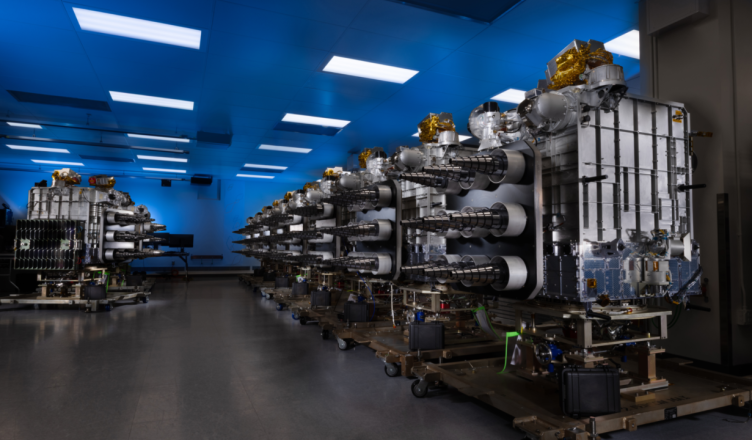
- Pre-Launch Insurance: This covers the asset—the satellite, the payload—while it’s being built, transported to the launch site, and integrated onto the rocket. A simple drop in the cleanroom can mean millions in damages.
- Launch Insurance: The big one. This covers the period from ignition to spacecraft separation and initial orbit insertion. It’s usually a 12-to-36-month policy for the launch itself. Given that launch failures, while becoming rarer, still happen, this is a massive chunk of risk.
- In-Orbit / Satellite Life Insurance: Once safely in space, the job isn’t done. This covers operational failure, gradual degradation, or collision with space debris over the satellite’s operational life, which can be 5-15 years.
- Third-Party Liability Insurance: Crucially, this is often mandated by law. It covers damage the launch or satellite might cause to other people’s property… including other, vastly more expensive, satellites or the International Space Station. You know, the ultimate fender-bender.
Pain Points and New Solutions for New Space
The old guard of space insurance was built for bespoke, billion-dollar government satellites. The new space economy is about constellations of hundreds or thousands of smaller, cheaper satellites. The old model doesn’t scale. So, what’s changing?
For one, insurers are getting smarter. They’re demanding—and using—more data. Telemetry from the spacecraft, better debris tracking, and advanced simulations help them price risk more accurately. Some are even using AI to model failure scenarios.
And then there’s the move towards parametric insurance. This is a game-changer. Instead of a lengthy claims process to prove a loss, a parametric policy pays out based on a triggering event that can be independently verified. Think of it like this: if your satellite doesn’t reach a specific orbit altitude within a set time after launch, the policy pays. Simple, fast, and transparent. It’s perfect for startups that need capital to rebuild quickly.
The Emerging Risks Everyone’s Watching
Beyond rocket explosions, new worries are climbing the risk chart:
- Space Debris & Congestion: Low Earth Orbit is getting crowded. The risk of collision is no longer theoretical. Who’s liable if your satellite hits a piece of debris and the fragments take out a competitor’s array? The liability frameworks are, let’s say, under construction.
- Cyber-Attacks: A satellite is a computer in a harsh environment. Jamming, spoofing, or hacking its controls could lead to total loss or catastrophic liability. Ground station security is now a direct underwriting consideration.
- New Mission Types: How do you underwrite a lunar lander? Or a satellite servicing mission that involves touching another vehicle? Or, honestly, space tourism? The precedents are being set right now.
| Risk Category | Traditional Model | Emerging Adaptation |
| Pricing | High, bespoke premiums | Portfolio rates for constellations, parametric triggers |
| Data | Limited, proprietary | Shared telemetry, open-source debris tracking, AI models |
| Customers | Large gov’t contractors | VC-backed startups, ride-share payloads, tourism firms |
| Coverage Scope | Launch & in-orbit | End-to-end mission life, including on-orbit servicing & decommissioning |
Securing the Future: A Symbiotic Relationship
In fact, the relationship between insurers and space companies is becoming symbiotic, not adversarial. Insurers are becoming de facto safety auditors. To get a decent rate, a company must demonstrate rigorous testing, redundancy, and operational excellence. This pushes the entire industry toward higher reliability standards—which is good for everyone looking up.
For a new space economy venture, navigating this landscape is a critical early step. You can’t secure funding without a credible risk mitigation plan, and that plan’s cornerstone is insurance. It’s not just about transferring risk; it’s about proving your venture is a serious, investable business.
So, what’s the bottom line? The commercial space industry is hurtling forward. The insurance market, once a cautious gatekeeper, is innovating to keep pace—creating new products, leveraging new data, and fundamentally rethinking how to price the perils of the void. They are, in a very real sense, the silent partners enabling the bold dreams of the final frontier. Without them, the new space economy simply doesn’t get off the ground.
The next decade won’t just be about who builds the best rocket. It’ll be about who best manages the intricate, down-to-earth business of risk. Because in space, no one can hear you… file a claim. You need that sorted long before launch.