
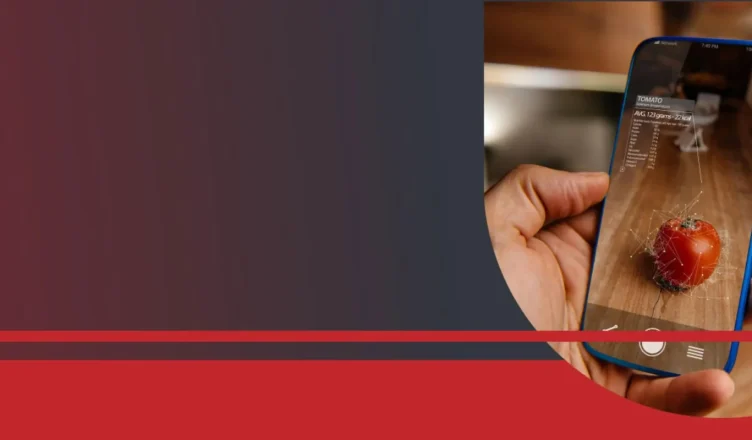
The trade show floor is a battlefield for attention. You’ve got the same carpet, the same fluorescent lights, and a sea of competitors just a few feet away. For years, product demonstrations have relied on physical samples, static displays, and, let’s be honest, a lot of hopeful hand-waving. But what if your demo could transport a visitor inside the product? What if they could operate a million-dollar machine or visualize a custom configuration right there, without a single crate being shipped?
That’s the promise—no, the reality—of integrating Augmented Reality (AR) and immersive technology. It’s not just a gimmick anymore. It’s a fundamental shift in how we connect, explain, and wow potential clients in a crowded space.
Why Sticking to Physical Demos is a Silent Killer
First, let’s talk about the old way’s pain points. You know them. The cost of shipping heavy equipment is astronomical. The risk of damage is a constant, low-grade anxiety. The product might be too large (think industrial turbines) or too small (think microchips) to demonstrate effectively. And honestly, even a perfect physical demo is a one-note song. It shows what it shows. It can’t adapt to a visitor’s specific “what-if” question on the fly.
Immersive tech solves for this. It turns constraints into possibilities. AR overlays digital information onto the real world through a tablet or smart glasses. VR (Virtual Reality) creates a fully digital environment. And MR (Mixed Reality) blends both, letting digital and physical objects interact. For the show floor, AR and MR are often the stars—they keep people engaged in your booth space while unlocking the impossible.
The Tangible Magic: Use Cases That Actually Work
Okay, so how does this look in practice? Here are a few concrete ways companies are leveraging AR for product demonstrations right now.
1. The “Phantom Product” Demo
No physical product? No problem. Using a simple marker or a spatial anchor, visitors can point a device at an empty space and see a full-scale, 3D model of your product appear. They can walk around it, peer underneath it, and see it from every angle. A farm equipment company might have a life-size virtual tractor in their 10×10 booth. A furniture brand can show how an entire office set fits—and looks—in a proposed floor plan.
2. The Interactive “X-Ray” Vision
This is where you create a true “wow” moment. Aim a tablet at a product’s housing, and suddenly the exterior becomes transparent, revealing the complex inner workings. An automotive supplier can show the fluid dynamics inside a pump. A tech company can highlight the innovative cooling system inside a server. It explains value in a way a cutaway model never could, because it’s layered directly onto the real thing.
3. Real-Time Customization and Configuration
This is the ultimate engagement tool. A visitor picks up a tablet, selects a base product, and then changes colors, materials, components, or features in real-time. The AR view updates instantly. Imagine a custom industrial design process where a client swaps out tool heads, adjusts arm lengths, and sees the final custom machine assembled before their eyes, complete with updated specs and price. It turns a demo into a collaborative design session.
Making It Work: A Practical Integration Checklist
Convinced of the “why” but nervous about the “how”? Here’s a straightforward list to think through. You don’t need a Hollywood budget, but you do need a strategy.
- Start with the Story, Not the Tech: What’s the one thing about your product that’s hardest to explain or most impressive to see? Build the experience around that single, powerful story.
- Choose the Right Hardware: For most booths, consumer-grade tablets on lanyards are perfect. They’re familiar, easy to sanitize, and powerful enough. For a more hands-free, premium feel, consider lightweight AR glasses.
- Design for the Environment: Show floors are loud, busy, and have unpredictable lighting and Wi-Fi. Your experience must be intuitive in under 30 seconds and, ideally, work partially offline.
- Train Your Staff as Guides, Not Tech Support: Your team’s role shifts from reciting specs to facilitating a discovery journey. They should be able to say, “Here, try changing the material yourself,” and step back.
- Capture the Data, Gently: The interaction is a goldmine. With permission, you can capture which configurations were most viewed, how long people engaged, and what features they tapped on. This is qualitative lead intelligence you simply can’t get from a scanned badge.
The Measurable Impact: It’s More Than Just Buzz
Beyond the oohs and aahs, what’s the real ROI of an immersive trade show experience? Let’s break it down.
| Metric | Traditional Demo | AR/Immersive Demo |
| Dwell Time | 2-3 minutes | 8-12+ minutes |
| Information Retention | Low (reliant on brochures) | High (experiential learning) |
| Lead Qualification Depth | Surface-level | Deep, based on interaction data |
| Post-Event Recall | “The blue booth with the thing.” | “The company where I built the virtual prototype.” |
You see, it creates a memorable anchor in a prospect’s mind. They don’t just hear about your product; they experience its value. That emotional and intellectual imprint is what drives follow-ups and, ultimately, conversions.
The Human Touch in a Digital Experience
A fair worry is that tech might make the booth feel cold or isolating. The truth is, when done right, it does the opposite. It becomes a social catalyst. One person uses the tablet, and a small crowd gathers to watch. It sparks conversations that start with, “Whoa, how did you do that?” rather than, “Can I take your brochure?” It gives your staff a powerful prop to facilitate a deeper, more consultative dialogue. The tech handles the explanation; your people handle the relationship.
So, where does this leave us? The show floor of the future isn’t about having the biggest booth. It’s about creating the richest, most resonant experience. It’s about letting your product speak for itself in a language that’s visual, interactive, and undeniably compelling.
The barrier to entry is lower than you think. And the risk? Well, the real risk is letting your competitor be the one that visitors remember as the innovator—the one that didn’t just show a product, but brought its potential to life.