
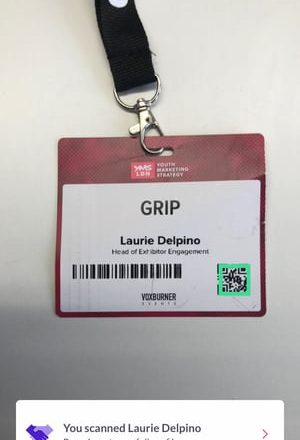
You know that feeling? You’re walking a trade show floor, and it’s a blur of banners, chatter, and free pens. Suddenly, someone stops at your booth. They glance at your product, maybe ask a quick question. Then they’re gone. That split second — that tiny window — is everything. That’s a micro-moment. And honestly, most exhibitors miss it completely.
What exactly is a micro-moment?
Google coined the term years ago. It’s that instant when someone picks up their phone to learn, do, discover, or buy. But at a trade show? It’s different. It’s physical. It’s the moment a prospect makes eye contact, pauses mid-stride, or reaches for a brochure. These moments last seconds — maybe five, maybe ten. But they’re packed with intent.
Here’s the deal: in a noisy hall, attention is scarce. Your lead capture strategy can’t rely on long conversations or detailed demos anymore. It has to live in those micro-moments. The ones where a visitor’s brain says, “Huh, that’s interesting,” before their feet move on.
The “I want to know” moment
This is the first flicker of curiosity. A prospect walks by, sees your sign, and wonders, “What does that do?” They don’t want a pitch. They want a quick answer. Your job? Make that answer impossible to ignore. A bold demo video playing on loop. A product sample they can touch. A single, punchy sentence on your banner. No fluff.
I’ve seen booths with QR codes that lead to a 30-second explainer video. That’s smart. It respects the micro-moment. It gives them just enough to spark a “I want to go” or “I want to do” impulse.
Why traditional lead capture fails here
Let’s be real. The old way — clipboard, business card, “Can I scan your badge?” — it’s clunky. It interrupts the micro-moment. You’re asking for commitment before they’ve even decided if they care. That’s like proposing on a first date. Sure, it works sometimes, but mostly it scares people off.
Think about it: a visitor is in a “I want to know” moment. They glance at your widget. You step forward with a scanner. They hesitate. They say, “Oh, I’m just looking.” And they’re gone. You lost them because you tried to capture a lead before earning the right to.
So, what’s the fix? You need to capture intent without friction. You need tools that work in the moment, not after it.
Tools that match the moment
Here are a few that actually work — and they’re not all high-tech:
- Passive scanning: Use RFID or NFC tags on your product demos. When someone touches a sample, it logs their badge. No awkward questions.
- Tap-to-connect: A simple NFC sticker on your counter. “Tap here for a digital brochure.” They tap, you get their info — but only if they opt in.
- Visual cues: A small sign that says, “Text ‘DEMO’ to 555-1234.” It’s low-commitment. They do it in a second.
- Lead retrieval apps: Some let you scan badges with a tablet, but only after a visitor initiates. Let them press a button to “save” their contact.
The key? Each tool respects the visitor’s pace. It doesn’t demand. It invites.
Mapping micro-moments to your booth flow
You can’t plan for every micro-moment. But you can design a booth that catches them. Think of it like a funnel — but faster. Way faster.
First, there’s the approach moment. Someone is ten feet away. They’re scanning. Your booth needs a “hook” — a visual or sound that stops them. A bright color, a moving part, a laugh from a demo. That’s your first micro-moment. Capture it with a simple call to action: “See it in action — 30 seconds.”
Then, the engagement moment. They’re at your booth. They touch a product or watch a video. This is where you’d normally pounce. Don’t. Instead, let them interact. A touchscreen with a quiz. A product that lights up when they press a button. Let the moment speak.
Finally, the commitment moment. They’ve seen enough. They want more. This is when you ask for the lead. But make it easy. A tablet with a pre-filled form — just their email. Or a QR code that adds them to your newsletter. No long forms. No “What’s your company revenue?” Not yet.
A quick table to visualize it
| Micro-moment | Visitor intent | Your action | Lead capture tool |
|---|---|---|---|
| Approach | “What’s that?” | Display a bold demo | QR code to video |
| Engagement | “How does it work?” | Let them touch/play | NFC tap for specs |
| Commitment | “I want this info” | Offer a digital card | Text-to-join or tablet |
See the flow? Each moment builds on the last. You’re not forcing. You’re guiding.
Real-world example — the “accidental” lead
I remember a booth at CES a few years back. A company made ergonomic keyboards. They had a few keyboards on display, just sitting there. No staff hovering. A sign said, “Type your name — see how it feels.” Visitors would walk up, type their name, and a small screen would show a thank-you message. That was it. But behind the scenes, the keyboard logged their badge info. They’d typed their name. They’d opted in — without even realizing it.
That’s micro-moment genius. It turned a “I want to try” into a lead capture. No pitch. No pressure. Just a natural interaction.
Common mistakes — and how to dodge them
Let’s be honest, we’ve all made these errors. Here’s what to avoid:
- Over-staffing the booth. Too many people creates a wall. Visitors feel watched. Micro-moments need space.
- Asking for too much info. Phone number, job title, company size… in a micro-moment? No. Just email or name.
- Ignoring body language. If someone’s eyes are darting, they’re not ready. Let them wander.
- Using old tech. A paper sign-up sheet? That’s a micro-moment killer. It takes too long.
Instead, think speed. Think frictionless. Think like a visitor who’s already overwhelmed.
The “friction audit” you need to run
Before your next show, walk through your booth as a stranger. Time every interaction. If it takes more than 10 seconds to get a lead, it’s too slow. Redesign it. Seriously.
And here’s a quirk I’ve noticed: sometimes the best micro-moment capture is analog. A bowl of candy with a note: “Take one — leave your card.” It’s old-school, but it works. Why? Because it’s instant. No tech barrier. Just a moment of generosity.
Bringing it all together — a micro-moment mindset
Trade shows are chaotic. But within that chaos, there are tiny pockets of clarity — micro-moments. They’re fragile. They’re fleeting. But they’re also where real connections start.
Your lead capture shouldn’t feel like a transaction. It should feel like a natural next step. A tap. A text. A quick scan. The visitor leaves with a positive feeling, not a “Ugh, I gave them my info” regret.
And honestly? That’s the real win. Not just a list of names, but a list of people who actually wanted to be there. People who had a micro-moment of curiosity — and you honored it.
So next time you’re at a show, watch for those tiny windows. Don’t rush. Don’t grab. Just be ready. Because in a world of noise, the quietest moments often speak the loudest.